
A2LA Certification: All the Information You Need

by gcc-admin-alpha

A2LA certification is a prestigious accreditation that validates an organization’s expertise in specific testing and calibration fields. Accreditation by the American Association for Laboratory Accreditation (A2LA) is recognized in the industry as a mark of excellence and dependability.

In today’s competitive market, standing out from the crowd is critical. Obtaining A2LA certification is one way to accomplish this. A2LA certification is an internationally recognized accreditation that confirms a company’s expertise in specific testing and calibration fields.

In this blog post, we’ll look at why A2LA certification is important and how it can help your company.

What is A2LA Certification?

A2LA certification is a globally recognized accreditation body that offers services such as testing, calibration, and laboratory accreditation. It is a non-profit organization that has accredited over 3,100 organizations worldwide in its 40-year history.

A2LA certification ensures that a company meets stringent technical and management requirements, and that its employees are competent and qualified to perform testing and calibration activities. A2LA’s accreditation scope includes medical, aerospace, automotive, and environmental industries.

Why is A2LA Certification Important?

Both organizations and their clients benefit from A2LA certification. A2LA accreditation gives organizations a competitive advantage in the industry, improves their reputation, and boosts their credibility. A2LA accreditation also demonstrates an organization’s dedication to quality and continuous improvement.

For clients, A2LA accreditation ensures that an organization’s testing and calibration services are dependable, accurate, and up to the highest standards. Clients can rest assured that their products and services will meet regulatory and industry standards.

Importance of A2LA Certification

  • Exhibit Competence and Credibility

A2LA certification provides an objective and unbiased assessment of a company’s technical and management capabilities. It shows clients, regulators, and stakeholders that your company has met the highest standards and is capable of providing reliable and accurate testing and calibration services.

You can distinguish your company from competitors who do not have the same level of accreditation by obtaining A2LA certification.

  • Improves Reputation and Marketability

A2LA certification is a mark of quality and dependability in the industry. It improves your company’s reputation and credibility with clients, regulators, and stakeholders.

A2LA accreditation can also help your organization’s marketability. Clients are more likely to select an accredited organization because they are confident that their products and services will meet regulatory and industry standards.

  • Ensures Compliance with Regulations and Standards

A2LA certification ensures that your organization meets the highest testing and calibration standards. It shows your dedication to quality and continuous improvement.

A2LA accreditation also ensures that your organization complies with all regulations and standards. This lowers the likelihood of noncompliance and the associated penalties and fines.

  • Increases Efficiency and Effectiveness

A2LA certification necessitates the implementation of a strong quality management system (QMS). By streamlining processes and reducing errors and rework, this improves efficiency and effectiveness.

A2LA certification allows your organization to identify and address areas for improvement in your QMS. This can result in increased efficiency, lower costs, and higher customer satisfaction.

  • Provides Access to New Markets

A2LA certification is recognized globally. This gives your company access to new markets and opportunities for growth.

A2LA accreditation also demonstrates your organization’s dedication to quality and compliance. This can be a major factor in gaining new clients and expanding into new markets.

Conclusion

A2LA certification is a valuable accreditation that demonstrates a our expertise and dependability in the testing and calibration industry. Accreditation by A2LA provides benefits to both us and our clients, such as increased credibility, reputation, and quality assurance. Accreditation by A2LA entails a rigorous evaluation and assessment process, but the benefits are well worth the effort.

Call us to discuss your calibration, test or repair needs at:
713.944.3139.

Request for Calibration Quote

Request for PPE/Glove Testing Quote
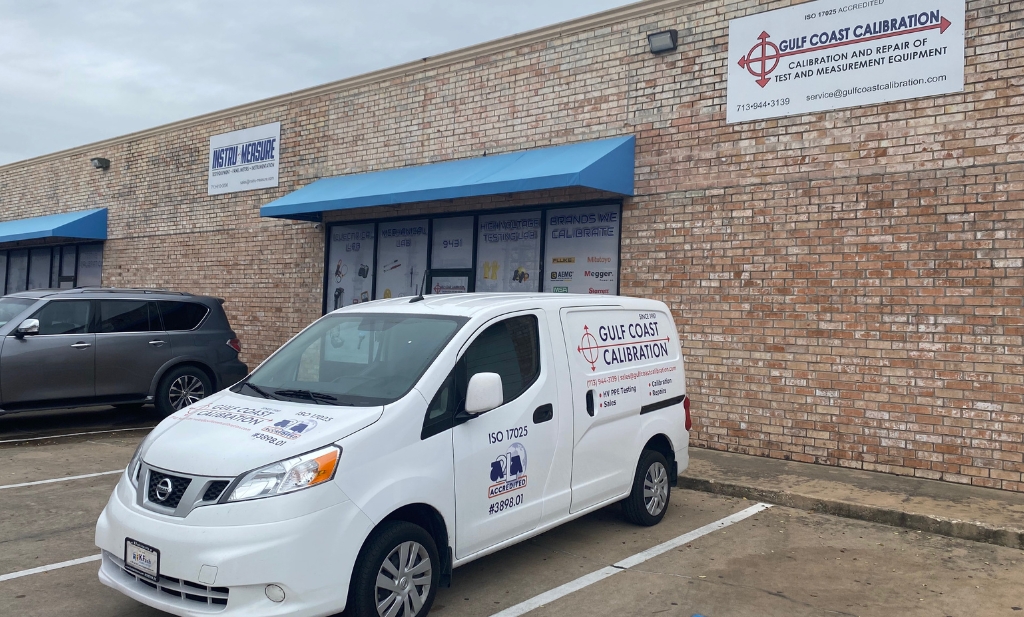
5 Factors To Consider When Selecting A Calibration Company

by gcc-admin-alpha

Weighing and measuring equipment is used in industries ranging from pharmaceutical manufacturing to military contracts to ensure compliance, precision, and safety. Unfortunately, due to normal wear and tear, every measuring instrument loses its effectiveness over time. Calibrating your measuring equipment has various advantages, including increased instrument life, more precise results, simpler certification, and lower expenses.

When it comes to calibrating your equipment, you need a calibration laboratory you can rely on for efficiency and peace of mind. Here are some things to think about when selecting calibration services for your equipment.

Accreditation

One of the characteristics to look for in a calibration lab is if it is third-party accredited. It is critical to work with a calibration service provider who has been accredited by third-party standardization bodies. This is because certification verifies the accuracy of a lab’s calibrations. When you work with an approved calibration laboratory, you can be confident that they satisfy quality assurance standards.

Look for a calibration service provider who has been accredited by numerous standardizing agencies. Some of the most valuable calibration lab accreditations are:

  • ISO/IEC 17025:2005
    This certification is provided by the International Organization for Standardization (ISO) and specifies the competence, consistency, and impartiality of a laboratory. ISO/IEC 17025 certification is commonly seen as a fundamental indicator of a laboratory’s competency. The standard is divided into five sections: general, management system, structure, resources, and process.

    This standard is critical for any calibration laboratory to meet since it improves a lab’s industry reputation and promotes efficiency, performance, and compliance.

  • ISO 9001
    ISO 9001 is another important standard. Although ISO 9001 is not as specifically aimed at calibration laboratories as ISO/IEC 17025, it is an essential part of implementing a quality management system (QMS). A quality management system (QMS) is a set of practices meant to help a company improve continuously.

    ISO 9001 certification may help any company that wants to provide high-quality products. The standard requires companies to document their operations in order to generate a QMS handbook. The accreditation procedure also includes regular audits by a certifying agency.

Capabilities

Precision calibration is critical for assessing the accuracy and effectiveness of your equipment. With so many sectors relying on metrology equipment, calibration laboratories must have the skills and capabilities to operate with a wide range of equipment. Calibration of a thermometer, for example, differs from calibration of a sensor.

A reputable calibration service provider can fulfill all of your calibration requirements, including:

  • Calibration of Pressure and Vacuum
    Pressure gages are widely used in food and beverage processing plants, labs, oil refineries, and other scientific settings. Pressure and vacuum calibration employ computerized pressure modules to determine if pressure gages produce reliable data, assisting organizations in meeting customer expectations and adhering to industry standards.
  • Mass and torque calibration
    Torque devices are used during production when the automotive and machine manufacturing sectors need to measure torque. Manufacturers can guarantee their devices transmit the proper tension to the fastener by performing frequent torque and mass calibration.
  • Calibration of Electronics
    Electrical characteristics such as current, voltage, resistance, time, and frequency must be measured in a variety of businesses. Electrical calibration is performed in calibration labs using calibration equipment that has been certified against standards from independent regulatory authorities.
  • Surface Plate Calibration and Resurfacing
    For accurate measurements, surface plates must fulfill flatness standards. These plates may have peaks or depressions from wear, indicating that they should be resurfaced on a regular basis. Surface Plate Calibration and Refinishing are critical for ensuring that goods satisfy industry requirements.

Accuracy

You want your company’s measurement equipment to be as precise as possible. Accurate calibration equipment can provide more precise findings, boosting the usefulness of your equipment.

A reliable calibration facility will either send a qualified technician to your location or calibrate your equipment in a laboratory. During the calibration procedure, the technician will compare your instrument’s measurements to a standard to check if they match.

If your equipment produces a reading that differs from the norm and falls outside of the standard accuracy ratio, the technician will discover the problem. They will then tweak your instrument till the reading is accurate.

Service To Customers

One of the finest traits of a calibration lab is a commitment to client service. Calibration must be done on a regular basis, perhaps as frequently as every few months, depending on how frequently the device is used. Developing a professional partnership with a full-service calibration service provider guarantees that the calibration process runs smoothly and that your equipment satisfies expert requirements.

Here are some of the customer service advantages to look for in a calibration lab:

  • Knowledgeable technicians: When acquiring on-site calibration services, you want professionals that understand the processes required to calibrate your unique equipment. Look for a trustworthy calibration business that has properly trained specialists that can do on-site calibration.
  • Fast turnaround: When you need equipment calibration services but want to avoid costly downtime, look for a calibration company with fast turnaround times. You should be able to ask a calibration laboratory about how long it takes them to service equipment. Few manufacturers can afford to be without an essential piece of equipment for months as they wait for calibration. Look for a calibration laboratory that can complete the calibration in a few days.
  • Multiple ways to calibrate: Many calibration labs will perform field calibration, where they send a technician to your company’s location to perform the calibration on-site. While this method saves time on shipping, calibration may not work if temperature and humidity interfere with sensitive devices. Look for a calibration service provider that offers multiple calibration methods, including on-site and laboratory calibration. If the lab provides regional pickup and delivery, that’s another bonus.

Experience

When it comes to measuring precision, you need experienced calibration services to assure the functioning of your equipment. Consider hiring a calibrating business with years of expertise. Working with an expert calibration service provider has the following advantages:

  • Precision calibration services on a full-service basis.
  • Professional, experienced specialists that can solve equipment difficulties.
  • Services for equipment repair.

Let Gulf Coast Manage Your Calibration Schedule.

Are you looking for calibration services, or is your equipment producing out-of-the-ordinary results? If so, you’ve come to the right place. Gulf Coast Calibration has over 40 years of expertise and has developed to become one of the Gulf Coast region finest weighing equipment and calibration firms. Our calibration services, which encompass equipment in a variety of sectors, are provided through our in-house laboratory or on-site at our clients’ facilities.

Call us to discuss your calibration, test or repair needs at:
713.944.3139.

Request for Calibration Quote
Request for PPE/Glove Testing Quote
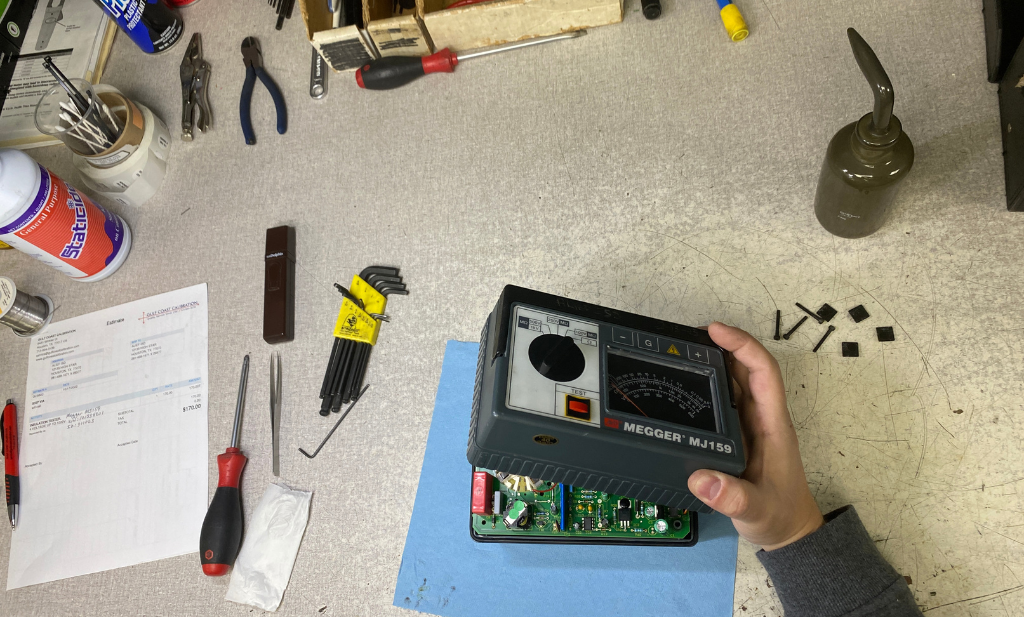
10 Reasons to Calibrate your Instruments with Gulf Coast Calibration

by gcc-admin-alpha

Is it more essential to be accurate or timely?

You get both when you work with Gulf Coast CalibrationA2LA-accredited calibrations lab.

Gulf Coast Calibration has been committed to producing the finest, high-precision pressure measurement and calibration systems available since 1981 â€“ it is this international reputation for quality and service that meets your requirements for both timeliness AND accuracy.

We understand your industry and business. We support a wide range of systems in addition to our own. We understand the distinction between process time and lead time, and we guarantee 5-day or less in lead time.

Why Should You Calibrate?

The reasons for calibrating are simple. Component, equipment, and product calibration can:

  1. Spend less money:
    Profits will rise if costs and waste are reduced through standardization.
  2. Ensure Your Safety:
    Products and components that have been calibrated work as expected and are safe to use.
  3. Ensure High Quality:
    Calibrated components and equipment will consistently create standardized products.
  4. Reduce Production Time:
    When high-quality components are available, there is no need to waste time changing out-of-spec components.
  5. Ensure Certification Compliance:
    It is guaranteed that industry rules and corporate certifications are followed.
  6. Ascertain Accuracy:
    Calibration will enable consistent reporting of product correctness.
  7. Allows for traceability:
    If necessary, calibrations can be undertaken with traceability to national standards.
  8. Improve consistency and dependability:
    Products that are manufactured to specifications perform better and endure longer.
  9. Make up for Drift:
    Regular calibration eliminates drift error.
  10. Process Failures Can Be Prevented and Predicted:
    Sensors that are reliable and precise can identify a gradual shift toward out of tolerance process conditions.

How Often Should You Calibrate?

Calibration, at its heart, is a method for determining the best approximation of the real value of a quantity being measured. There is no way to determine the exact value of a measurement, but it is feasible to come close. This proximity to the truth is what we call accuracy. Calibration is a method of ensuring that measurements collected from a device are accurate. This is accomplished by comparing the device output to a more accurate reference device. Best practices necessitate that this reference device be traceable to a national or international standard in SI units.

Some sensors wander more than others. Manufacturers typically have a reasonable notion of how long a sensor will take to drift out of tolerance. A “calibration interval” will be recommended by a manufacturer based on their expertise and the inherent calibration stability of a sensor. The calibration interval is often specified in the sensor’s specifications. The term “recommendation” indicates some freedom in extending or shortening the period based on an individual sensor’s continuing history. Some sensors may remain in tolerance for a longer period of time than others. In practice, the user must decide whether to re-calibrate depending on their experience with each sensor.

Call us to discuss your calibration, test or repair needs at:
713.944.3139.

Request for Calibration Quote

Request for PPE/Glove Testing Quote