
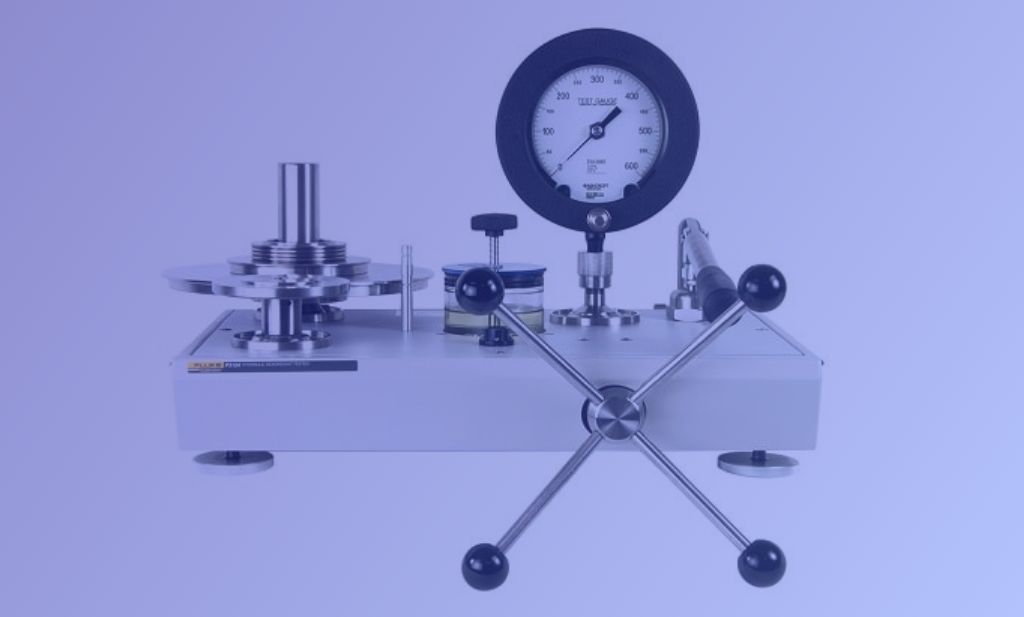
The Importance of Calibrating Your Pressure Gauge

by gcc-admin-alpha

In industrial settings, a pressure gauge is one of the most essential instruments used to measure and monitor pressure levels in various applications, from manufacturing and HVAC systems to oil and gas pipelines. Ensuring that your pressure gauge is accurate isn’t just a matter of operational efficiency it’s a critical factor in maintaining safety, regulatory compliance, and cost-effectiveness.

At Gulf Coast Calibration, we specialize in precise calibration services, helping businesses maintain the accuracy of their equipment and ensure optimal performance. In this post, we’ll dive into the importance of calibrating your pressure gauge and the value it brings to your operations.

1. Safety Comes First

Pressure gauges are often used in high-stakes environments where even a small deviation from true pressure readings could lead to dangerous conditions. A miscalibrated gauge might display incorrect information, potentially leading to an unsafe increase in pressure. Regular calibration ensures that readings are accurate, helping prevent incidents like equipment failure, leaks, or even explosions, which can endanger personnel and damage facilities.

2. Maintaining Compliance with Industry Standards

Many industries, including oil and gas, pharmaceuticals, food processing, and manufacturing, must adhere to strict regulatory standards for safety and quality. Regulatory bodies such as OSHA, ISO, and ASME often require routine calibration of pressure gauges as part of compliance protocols. By calibrating your gauges with Gulf Coast Calibration, you can be confident that you meet industry standards and regulatory requirements, avoiding potential fines or operational shutdowns.

3. Ensuring Operational Efficiency

Even a slight inaccuracy in your pressure readings can lead to inefficiencies in your systems. For instance, in manufacturing, incorrect pressure can cause production inconsistencies, resulting in product defects or wasted materials. Regular calibration ensures your gauge is operating precisely as intended, optimizing the efficiency of your processes and minimizing waste. This level of precision is particularly important for industries with tight tolerances or sensitive pressure requirements.

4. Prolonging Equipment Life

When pressure gauges provide accurate readings, systems are less likely to be subjected to stress, overpressure, or misapplication. By keeping pressure levels within their ideal range, you reduce the wear and tear on equipment and prevent premature failures. Investing in regular calibration can ultimately extend the life of your equipment, reducing repair and replacement costs over time.

5. Cost Savings in the Long Run

At first glance, calibration might seem like an added expense, but in the long run, it actually saves money. Accurate gauges reduce the risk of accidents, operational inefficiencies, and equipment damage all of which can be costly to address. By regularly calibrating your pressure gauges, you avoid these unexpected expenses and keep operations running smoothly

6. Building Trust with Your Customers

In industries where products are directly impacted by pressure (such as in pharmaceuticals, food and beverage, or chemical manufacturing), an accurate pressure gauge contributes to consistent quality. When your customers know that you prioritize precision and safety by calibrating your equipment regularly, you build trust in your brand and your products.

When Should You Calibrate Your Pressure Gauge?

The frequency of calibration depends on a few factors: the industry standards in your field, the sensitivity and type of gauge, and environmental conditions. At Gulf Coast Calibration, we recommend that gauges be calibrated at least annually, but high-precision or high-use applications might require calibration every six months or even quarterly.

Why Choose Gulf Coast Calibration?

At Gulf Coast Calibration, we understand the unique demands of pressure gauge calibration. Our team of experts brings precision and reliability to every calibration project, ensuring that your gauges are accurate and dependable. We offer on-site calibration services tailored to fit your schedule, minimizing downtime while maintaining accuracy.

Call us to discuss your calibration, test or repair needs at:
713.944.3139.

Request for Calibration Quote
Request for PPE/Glove Testing Quote
Pressure Gauge Calibration

by gcc-admin-alpha

Pressure gauge calibration is the process of comparing a pressure gauge’s accuracy to a recognized standard. This is accomplished by comparing the gauge’s output to that of a reference gauge or by delivering a known pressure to the gauge and measuring the output. Calibration may be done on a number of pressure gauges, including analog and digital gauges, and is a vital step in ensuring that the gauge provides accurate and trustworthy readings. Calibration of a pressure gauge often entails changing the gauge to ensure compliance with industry standards and regulations. To discover more about how pressure gauges operate, see our page on how they function.

How to calibrate a pressure gauge

Pressure calibration equipment such as a deadweight tester, standard pneumatic calibrator, or any other pressure gauge calibrator with an accurate reading is used to calibrate a pressure gauge. The main ideas and processes to calibrate a pressure gauge are quite same regardless of the tool, whether it’s mechanical or digital gauge calibration.

  • Using the proper adapter or fitting, connect the hand pump calibrator to the pressure gauge to be calibrated.
  • Set the hand pump calibrator to the required pressure.
  • Pump the hand pump calibrator gradually until the appropriate pressure is obtained.
  • Examine the pressure gauge and make sure it reads the same as the manual pump calibrator.
  • If the gauge does not read the right pressure, follow the manufacturer’s instructions.
  • Repeat the procedure at each pressure point to check that the gauge is accurate throughout its range.
  • Record the calibration results and make any required modifications.
    When the calibration is finished, remove the hand pump calibrator and store it properly.

Factors to consider for pressure gauge calibration

A precise pressure system is used for pressure calibration. The pressure reading on calibrated pressure gauges is logged and compared to the uncalibrated gauge to determine the margin of error. However, several factors can influence the calibration process and should be considered:

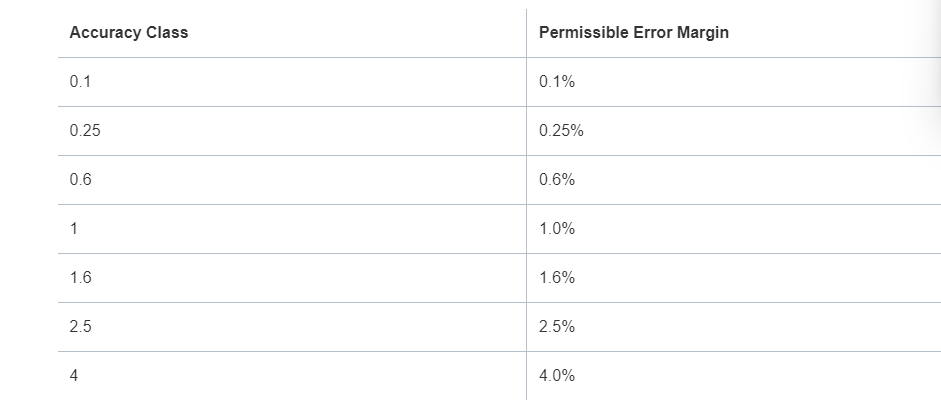
  • Accuracy class:

    The accuracy class is the pressure gauge’s maximum margin of error for the maximum scale reading. The accuracy class will assist operators in determining the permissible margin of error during calibration. The table below will assist you in determining the allowable error margin based on the accuracy class of the pressure gauge.

Image Source: Tameson

Call us to discuss your calibration, test or repair needs at:
713.944.3139.

Request for Calibration Quote
Request for PPE/Glove Testing Quote

  • Pressure media:

    When calibrating a pressure gauge, it is best to utilize the same media that the pressure gauge is attached to. If this is not feasible, calibration with air/gas is appropriate for low-pressure gauges, whereas liquids are safer for high-pressure gauges.

  • Height difference:

    Because of the hydrostatic pressure of the medium, the difference in height between the pressure gauge calibration equipment and the pressure gauge might produce an inaccuracy during calibration. This is more common in liquid medium than in gas media. The size of the inaccuracy varies with the density of the liquid and the variation in height. If the calibration equipment and gauge cannot be placed at the same height, the effect of the height difference should be considered during calibration. A 2.5 cm (1 in) height variation allows for a pressure measurement error of around 0.02 bar (0.3 psi).

  • Contamination:

    Contamination such as dirt, moisture, or oil can harm both the pressure gauge and the calibration equipment. As a result, it is critical to ensure that the media and equipment are free of contamination and do not interfere with the operation.

  • Leak testing:

    A leak test is required prior to calibration because any leakage in the pipe system might cause calibration problems. Pressurizing the system, allowing the pressure gauge to settle, and monitoring the pressure are all ways to do a leak test. Any decrease in pressure might indicate a leak. During calibration, the pressure loss must be kept to a minimum.

  • Adiabatic effect:

    When the pressure quickly varies, the adiabatic effect can impair pressure gauge calibration accuracy. As the pressure fluctuates quickly, the temperature of the fluid inside the gauge changes, affecting the density of the fluid and hence the pressure. This might result in mistakes in the gauge’s reading, leading to erroneous calibration findings.

    It is advised to utilize a pressure gauge with a high-frequency response to reduce the impacts of the adiabatic effect during calibration. Such gauges have a quicker reaction time and can correctly monitor rapid pressure changes.

  • Pressurizing or exercising the gauge:

    Friction is caused by movement in mechanical pressure gauges. Exercising or pressurizing the system prior to calibration might help to minimize friction. This is accomplished by applying the nominal pressure, holding it for a minute, and then releasing it. Repeat two or three times more.

  • Mounting position:

    Because the pressure gauge is mechanical, the location of the gauge might impact the pressure measurement in the system. As a result, it is advised that the gauge be calibrated in the same place that it will be used in the real pressure measurement process. To guarantee proper installation, see the manufacturer’s instructions.

  • Readability:

    During calibration, adjust the input pressure so that the indicator needle always lands on a major scale mark instead of in between them. This makes the calibration process more convenient.

  • Hysteresis:

    The discrepancy in pressure readings when a gauge is subjected to increased and lowering pressure is referred to as hysteresis in pressure gauge calibration. In other words, it is the difference in pressure readings between when a gauge is calibrated while rising pressure and when it is calibrated while reducing pressure. Mechanical wear, temperature variations, and gauge design can all contribute to this variance. When calibrating pressure gauges, it is critical to account for hysteresis to guarantee accurate results.

  • Repeatability:

    Repeatability, or the ability to generate the same reading for the same input, is one of the characteristics of an accurate pressure gauge. Calibration is required if the gauge produces different results each time. It is advised that the gauge be pressurized for three cycles before calibration.

  • Environmental condition:

    The gauge reading may change depending on the temperature to which the procedure is subjected. Because the pressure gauge is typically calibrated at normal room temperature, changes in temperature can affect the accuracy of the pressure measurement. When calibrating, it is therefore advised to record the temperature and humidity.

  • Metrological traceability:

    Metrological traceability is critical in pressure gauge calibration because it assures that the gauge’s pressure measurements are accurate and compatible with the international system of units (SI). To establish metrological traceability in pressure gauge calibration, the gauge must be calibrated against a SI-traceable reference. The gauge is frequently compared to a recognized standard, such as a deadweight tester or a main pressure standard.

  • Calibration uncertainty:

    Calibration uncertainty might suggest a probable discrepancy in the calibrated value. Environmental factors, reference equipment, or operators taking the reading can all contribute to this uncertainty. It is critical to understand calibration uncertainty and separate mistake from uncertainty. Calculators for TUR (Test Uncertainty Ratio) or TAR (Test Accuracy Ratio) are one approach to be aware of linked uncertainty, albeit not all connected uncertainties are addressed. As a result, calculating the overall uncertainty of the calibration is advised to determine how successful the calibration is.

  • Calibration intervals:

    Pressure gauges must be calibrated on a regular basis to ensure the accuracy of the measurement. However, calibration requirements may vary based on the gauge’s purpose and design. Although there is no definitive answer, a typical guideline is once a year. However, it is also vital to verify for the manufacturer’s advise on the calibration time. Pressure gauges used in difficult working circumstances may necessitate more regular calibration.

In-house vs outsourcing calibration

Pressure gauge calibration can be done in-house or outsourced for maximum efficiency. The optimum option may be determined by the resources that a corporation is prepared to invest.

In-house calibration necessitates an investment in calibration equipment, specialists, training, and the establishment of a controlled environment. Even with these measures, it is difficult to establish verification of calibration accuracy. This is due to the fact that gauges and calibration equipment must continuously fulfill all of the stringent national and international criteria in order to validate the calibration process, which can be difficult for small in-house operations. These are some examples:

  • ISO/IEC 17025: This standard enables labs to demonstrate that they operate effectively and deliver legitimate findings, encouraging trust in their work both locally and globally.
  • ASME B40 – 2013: This American Association of Mechanical Engineers standard includes specifications for pressure gauges, components, diaphragm seals, digital pressure gauges, and more. The handbook covers vocabulary and definitions, dimensions, safety, construction, and installation difficulties, testing and calibration processes, and general suggestions.

Call us to discuss your calibration, test or repair needs at:
713.944.3139.

Request for Calibration Quote
Request for PPE/Glove Testing Quote

The Difference Between NIST Traceable Calibrations and ISO/IEC 17025 Accredited Calibrations.

by gcc-admin-alpha

Customers frequently inquire about the distinction between traceable and certified calibrations when attempting to identify what their goods require. Knowing the significance of each can assist in ensuring that all calibration requirements are completed.

A NIST traceable calibration is one in which a manufacturer or calibration laboratory certifies that the standards used to calibrate a product or device are traceable to the International System of Units (SI) via an unbroken chain of comparable measurements to the National Institute of Standards and Technology (NIST), a U.S. Department of Commerce agency. A broader description of traceability recognizes that metrological traceability to SI may be achieved through any accredited national metrology institution, not just NIST. This sort of calibration does not reflect or determine the degree of expertise of the calibration crew or laboratory. It primarily indicates that the calibration standard is traceable to NIST or another recognized metrology institution (RMI).


An ISO/IEC 17025 approved calibration is globally recognized. The ISO 17025 accreditation certifies the calibration laboratory’s competency. According to ISO 17025, any number of national metrology institutions, such as the NIST, must be internationally approved for acceptable measurement traceability. A third-party organization, such as A2LA, NAVLAP, or any number of other ILAC-MRA signatory organizations, is one way to show metrological traceability. These organizations evaluate the laboratory and its operations in order to determine the laboratory’s competence to perform calibrations and provide accredited calibration results. The certificate is linked with the scope of work for which the laboratory has been accredited. The laboratory is audited on a regular basis to verify that it is still in accordance with the ISO/IEC 17025 standard.


Because the discipline of calibration is assessed in addition to the traceability of the standards, ISO/IEC 17025 approved calibration may be regarded a step above NIST calibration. Furthermore, the ISO/IEC 17025 calibration comprises not only the measurement traceability, but also the measurement uncertainties of the calibration findings.

What is the difference between NIST traceable (or comparable) calibration and ISO/IEC 17025 calibration?

The decision is frequently made by a company’s quality manual or the quality department. The selection might also be influenced by how the equipment requiring frequent calibration will be utilized. For example, if the equipment is utilized in a vital application and the firm faces responsibility if something goes wrong, ISO/IEC 17025 calibration may be worth considering. If the device is used primarily for reference purposes in a low-risk environment where the measurement must be “close enough,” a NIST traceable calibration is most likely all that is necessary.

Critical measurements include altimeters in airplanes, nuclear plant temperature, flow measurements in which flow or volume is connected with a monetary value, and medical equipment that monitors air pressure.

Tire gauges, process gauges that indicate good or bad (usually with green and red areas on the dial face), pressure switches and pressure dial gauges used in air compressors, or torque wrenches used in auto repair shops are examples of non-critical, low risk measurement devices that may be suitable for NIST calibration.

It is ultimately the duty of the device’s owner to decide the proper form of calibration necessary – NIST or ISO/IEC 17025 approved – to guarantee the calibration fulfills the criteria of their industry.

More information about the ISO/IEC 17025 standard may be obtained on the International Organization for Standardization (ISO) website and the International Laboratory Accreditation Cooperation (ILAC) website.


Let Gulf Coast Manage Your Calibration Schedule.

Are you looking for calibration services, or is your equipment producing out-of-the-ordinary results? If so, you’ve come to the right place. Gulf Coast Calibration has over 40 years of expertise and has developed to become one of the Gulf Coast region finest weighing equipment and calibration firms. Our calibration services, which encompass equipment in a variety of sectors, are provided through our in-house laboratory or on-site at our clients’ facilities.

Call us to discuss your calibration, test or repair needs at:
713.944.3139.

Request for Calibration Quote
Request for PPE/Glove Testing Quote