How Gulfcoast Calibration Boosts Engineering Success: Case Studies

by gcc-admin-alpha

Case Studies and happy customers Testimonial

Case Study 1: Precision in Electrical Measurements

The Challenge: An electrical engineering firm, responsible for designing and testing advanced electronics, encountered inaccuracies in their measurement equipment, leading to concerns about the quality and safety of their products.

Our Solution: Gulfcoast Calibration’s experts assessed their electrical measurement equipment, identified calibration issues, and conducted meticulous calibrations to ensure accuracy. We also provided detailed calibration certificates for documentation purposes.

The Outcome: After calibration, the engineering firm’s equipment provided precise and reliable measurements, ensuring the quality and safety of their electronic products. This not only boosted their product performance but also enhanced their reputation in the industry.

Testimonial from the Electrical Engineer:

5/5

“Gulfcoast Calibration has been an essential partner in our journey to achieving precision in our electrical measurements. Their attention to detail is unmatched.”

Case Study 2: Enhancing Mechanical Instrument Precision

The Challenge: A mechanical engineering company, specializing in the design and testing of mechanical components, was struggling with inconsistencies in their measurement equipment accuracy, resulting in inefficiencies in their manufacturing processes.

Our Solution: Gulfcoast Calibration’s team conducted a comprehensive assessment of their mechanical instruments, identified areas for improvement, and executed precision calibrations. We also recommended regular calibration checks to maintain accuracy.

The Outcome: After calibration, the mechanical engineering company achieved greater consistency and precision in their measurements, resulting in improved product quality and manufacturing efficiency. Our proactive approach to calibration maintenance ensured long-term success.

Testimonial from the Mechanical Engineer:

5/5

“Gulfcoast Calibration has played a critical role in elevating the precision of our mechanical instruments. We value their commitment to our success.”

Case Study 3: Compliance in Electrical Testing

The Challenge: An electrical testing laboratory faced compliance issues due to inaccuracies in their testing equipment. Non-compliance put their reputation and legal standing at risk.

Our Solution: We performed a thorough assessment of their electrical testing equipment and ensured that it met industry standards and regulatory requirements through calibration. Our comprehensive calibration reports met regulatory standards.

The Outcome: With our assistance, the electrical testing laboratory achieved regulatory compliance, securing their reputation and legal standing. They were praised by regulators for their dedication to maintaining accurate equipment.

Testimonial from the Laboratory Manager:

5/5

“Gulfcoast Calibration’s expertise in ensuring regulatory compliance has been crucial for maintaining our credibility and legal status. We trust their services completely.”

Case Study 4: Precision in Mechanical Testing

The Challenge: A mechanical testing facility that served clients in various industries found that their testing results were inconsistent due to inaccuracies in their equipment. This inconsistency was causing disputes with their clients and damaging their reputation.

Our Solution: Gulfcoast Calibration’s team conducted a thorough evaluation of their mechanical testing equipment and identified areas where calibration was required. We performed precise calibrations and provided detailed reports.

The Outcome: After calibration, the mechanical testing facility saw a remarkable improvement in their testing results. The consistency and precision in their measurements not only resolved disputes with clients but also enhanced their reputation as a reliable testing partner.

Testimonial from the Facility Manager:

5/5

“Gulfcoast Calibration’s dedication to precision in mechanical testing has been a game-changer for our business. Our clients trust us more than ever.”

Case Study 5: Ensuring Electrical Safety

The Challenge: An electrical service business specializing in electrical inspections and repairs was concerned about ensuring the safety of their clients’ electrical systems. They faced challenges related to the reliability of their test equipment and the accuracy of electrical measurements.

Our Solution: Gulfcoast Calibration conducted a comprehensive assessment of their electrical test equipment, identifying potential safety risks. We performed calibration to ensure accurate measurements and provided recommendations for periodic maintenance.

The Outcome: After calibration, the electrical service business was able to provide its clients with enhanced electrical safety assurance. Accurate electrical measurements gave their clients confidence in the reliability and safety of their electrical systems, which ultimately helped the business grow and build a reputation for excellence in electrical safety services.

Testimonial from the Service Manager:

5/5

“Gulfcoast Calibration’s expertise in ensuring electrical safety has been a significant asset to our business. We take pride in the safety and peace of mind we bring to our clients, thanks to Gulfcoast’s precision calibration services.”

If you’re ready to achieve your calibration goals in electrical and mechanical engineering, contact Gulfcoast Calibration today, and let us help you succeed with our specialized expertise.

Request for Calibration Quote
Request for PPE/Glove Testing Quote
Dimensional Inspection Tools Calibrate

by gcc-admin-alpha

Why You Need to Calibrate Your Dimensional Inspection Tools

[jotform id=”212342565239556″ title=”GCC – Request for Quote Form”]Dimensional inspection tools are essential for ensuring the quality and accuracy of your products. Whether you are measuring length, width, height, diameter, angle, or any other dimension, you need to have confidence that your tools are giving you the correct results. That’s why calibration is a vital process that should not be overlooked.

Calibration is the process of testing and adjusting measuring devices to ensure that they conform to a specified standard or reference. Calibration ensures that your dimensional inspection tools are accurate, reliable, and consistent. Calibration also helps you avoid costly errors, rework, and customer complaints.

But how often should you calibrate your dimensional inspection tools? And what are the best practices for tool calibration? Here are some tips to help you answer these questions.

How Often Should You Calibrate Your Dimensional Inspection Tools ?

The frequency of calibration depends on several factors, such as:

  • The type of tool and its intended use
  • The manufacturer’s recommendations and specifications
  • The environmental conditions and handling of the tool
  • The quality requirements and standards of your industry and customers
  • The results of previous calibrations and inspections

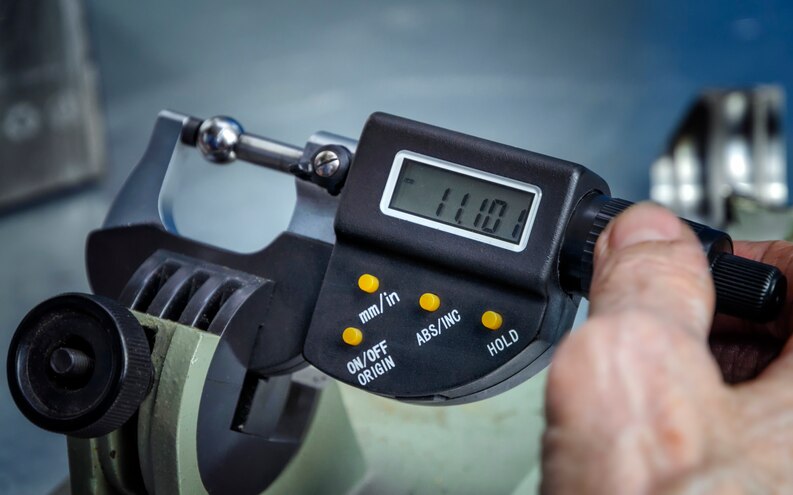
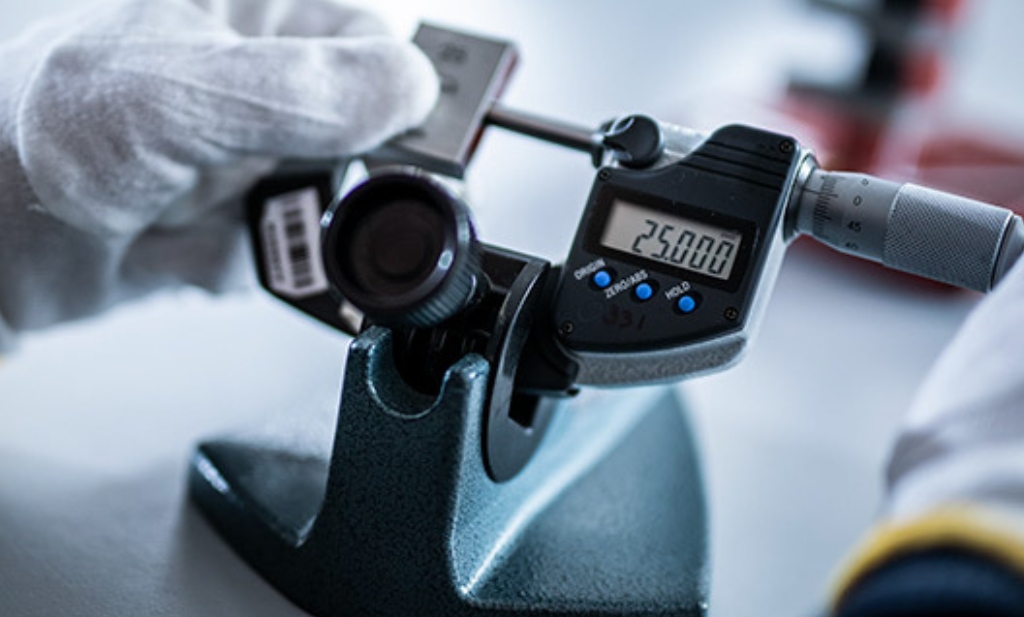
As a general rule, you should calibrate your dimensional inspection tools at least once a year. However, some tools may require more frequent calibration, depending on their usage and accuracy requirements. For example, micrometers and calipers may need to be calibrated every six months or even every three months, depending on how often they are used and how precise they need to be.

You should also calibrate your dimensional inspection tools whenever you notice any signs of damage, wear, or malfunction. For example, if you drop your tool, expose it to extreme temperatures or humidity, or observe any irregularities in its performance, you should calibrate it as soon as possible.

Dimensional Tools and Thier Common Defects

What Are the Best Practices for Tool Calibration?

To ensure that your tool calibration is effective and efficient, you should follow these best practices:

  • Identify the tools that require calibration and assign them a unique identification number
  • Maintain a calibration register that records the calibration history, status, and due date of each tool
  • Follow the manufacturer’s instructions and specifications for each tool
  • Use appropriate calibration procedures and equipment for each tool
  • Perform a pre-calibration inspection to check for any damage or wear on the tool
  • Adjust the tool as needed to bring it within the specified tolerance range
  • Record the calibration results and attach a calibration label to the tool
  • Store the calibrated tools in a clean, dry, and secure place
  • Monitor the performance and condition of the tools regularly

How Can Gulf Coast Calibration Help You with Tool Calibration?

If you are looking for a reliable and professional calibration service provider for your dimensional inspection tools, look no further than Gulf Coast Calibration. We have over 45 years of experience in providing calibration services for a wide range of measuring instruments, including calipers, micrometers, height gauges, dial indicators, and coordinate measuring machines.

We can provide calibration services on-site or at our calibration facility, depending on your needs and preferences. We use state-of-the-art equipment and software to ensure accurate and traceable measurements. We also follow strict quality standards and procedures to ensure compliance with ISO 9001:2015 requirements.

We offer competitive pricing and fast turnaround times for our calibration services. We also provide free pickup and delivery within our service area. We guarantee your satisfaction with our calibration services and we are always ready to answer any questions or concerns you may have.

Contact us today to get a free quote or schedule a calibration service for your dimensional inspection tools. We look forward to hearing from you soon!

Request for Calibration Quote

Request for PPE/Glove Testing Quote
Related resources:

Pressure: Definition and Types Explained

by gcc-admin-alpha

Pressure: Definition and Types Explained

It is not immediately evident that we live in a world where pressure is applied to every inch of our body (about 14.7 pounds per square inch at sea level). This was recognized in the 17th century by Evangelista Torricelli. “We live submerged at the bottom of an ocean of the element air,” he explained. Barometric pressure refers to the pressure exerted by the atmosphere in our gravitational field, which is an absolute pressure that varies with different weather systems. Because the slightly incompressible fluids in our body exert an equal and opposite pressure, we don’t feel this great amount of pressure.Different instruments will require a different calibration process. For example, a calibration lab will calibrate sensors differently from thermometers. Often, you can hire experts to come to your facility to calibrate the equipment, or you can send the equipment to a lab for calibration.Different instruments will require a different calibration process. For example, a calibration lab will calibrate sensors differently from thermometers. Often times, you can hire experts to come to your facility to calibrate the equipment, or you can send the equipment to a lab for calibration.

A force exerted perpendicular to an object’s surface per unit area is known as pressure. P = F/A is the mathematical formula, with P denoting pressure, F denoting force, and A denoting area. Pressure is a scalar quantity, meaning it has only magnitude and no directional vector properties. In practice, we can consider it as a force that operates equally on all surfaces to which it is exposed and is caused by the collective energy of the gas or liquid that touches that surface. Absolute and gauge pressures are distinguished by the pressure to which they are compared, which is known as the reference pressure.

For someone new to pressure measurement, the standard nomenclature used to describe the physical characteristic of a pressured system can be a little confusing. When selecting a pressure gauge, pressure controller, or calibrator, as well as a pressure transmitter, transducer, or sensor, knowing the standard terminology gives a common vocabulary that ensures you get exactly what you want. A discrepancy between the calibrated and the calibrator will also be eliminated.

The ambient atmospheric pressure is used as the gauge pressure’s reference. The standard for absolute pressure is an absolute vacuum. In a way, they’re both reading the difference between the reference pressure and the applied pressure. The reference pressure for gauge pressure, on the other hand, may fluctuate based on the current atmospheric pressure.

When a vessel is exposed to atmospheric pressure, we may wish to ensure that the vessel does not explode or implode. In this scenario, we can use a gauge pressure sensor with the reference exposed to air pressure to measure the difference between the ambient pressure and the internal pressure of the tank.

Types of Pressure

  • Differential pressure is the comparison of two different pressures. In essence, because they compare one pressure to another, all pressure measurements are differential. Differential pressure is used to assess flow in a pipeline, level, density, and even temperature, and is normally recorded at elevated line pressures.
  • Vacuum pressure, like gauge pressure, is a measure of pressure below atmospheric pressure and is stated as a positive number.
  • Bidirectional pressure, also known as gauge pressure, uses atmospheric pressure as a reference but measures pressure above atmospheric pressure as a positive pressure and pressure below atmospheric pressure as a negative pressure.

Call us to discuss your calibration needs at:
713.944.3139.

Request for Calibration Quote
Request for PPE/Glove Testing Quote