

5 Factors To Consider When Selecting A Calibration Company

by gcc-admin-alpha

Weighing and measuring equipment is used in industries ranging from pharmaceutical manufacturing to military contracts to ensure compliance, precision, and safety. Unfortunately, due to normal wear and tear, every measuring instrument loses its effectiveness over time. Calibrating your measuring equipment has various advantages, including increased instrument life, more precise results, simpler certification, and lower expenses.

When it comes to calibrating your equipment, you need a calibration laboratory you can rely on for efficiency and peace of mind. Here are some things to think about when selecting calibration services for your equipment.

Accreditation

One of the characteristics to look for in a calibration lab is if it is third-party accredited. It is critical to work with a calibration service provider who has been accredited by third-party standardization bodies. This is because certification verifies the accuracy of a lab’s calibrations. When you work with an approved calibration laboratory, you can be confident that they satisfy quality assurance standards.

Look for a calibration service provider who has been accredited by numerous standardizing agencies. Some of the most valuable calibration lab accreditations are:

  • ISO/IEC 17025:2005
    This certification is provided by the International Organization for Standardization (ISO) and specifies the competence, consistency, and impartiality of a laboratory. ISO/IEC 17025 certification is commonly seen as a fundamental indicator of a laboratory’s competency. The standard is divided into five sections: general, management system, structure, resources, and process.

    This standard is critical for any calibration laboratory to meet since it improves a lab’s industry reputation and promotes efficiency, performance, and compliance.

  • ISO 9001
    ISO 9001 is another important standard. Although ISO 9001 is not as specifically aimed at calibration laboratories as ISO/IEC 17025, it is an essential part of implementing a quality management system (QMS). A quality management system (QMS) is a set of practices meant to help a company improve continuously.

    ISO 9001 certification may help any company that wants to provide high-quality products. The standard requires companies to document their operations in order to generate a QMS handbook. The accreditation procedure also includes regular audits by a certifying agency.

Capabilities

Precision calibration is critical for assessing the accuracy and effectiveness of your equipment. With so many sectors relying on metrology equipment, calibration laboratories must have the skills and capabilities to operate with a wide range of equipment. Calibration of a thermometer, for example, differs from calibration of a sensor.

A reputable calibration service provider can fulfill all of your calibration requirements, including:

  • Calibration of Pressure and Vacuum
    Pressure gages are widely used in food and beverage processing plants, labs, oil refineries, and other scientific settings. Pressure and vacuum calibration employ computerized pressure modules to determine if pressure gages produce reliable data, assisting organizations in meeting customer expectations and adhering to industry standards.
  • Mass and torque calibration
    Torque devices are used during production when the automotive and machine manufacturing sectors need to measure torque. Manufacturers can guarantee their devices transmit the proper tension to the fastener by performing frequent torque and mass calibration.
  • Calibration of Electronics
    Electrical characteristics such as current, voltage, resistance, time, and frequency must be measured in a variety of businesses. Electrical calibration is performed in calibration labs using calibration equipment that has been certified against standards from independent regulatory authorities.
  • Surface Plate Calibration and Resurfacing
    For accurate measurements, surface plates must fulfill flatness standards. These plates may have peaks or depressions from wear, indicating that they should be resurfaced on a regular basis. Surface Plate Calibration and Refinishing are critical for ensuring that goods satisfy industry requirements.

Accuracy

You want your company’s measurement equipment to be as precise as possible. Accurate calibration equipment can provide more precise findings, boosting the usefulness of your equipment.

A reliable calibration facility will either send a qualified technician to your location or calibrate your equipment in a laboratory. During the calibration procedure, the technician will compare your instrument’s measurements to a standard to check if they match.

If your equipment produces a reading that differs from the norm and falls outside of the standard accuracy ratio, the technician will discover the problem. They will then tweak your instrument till the reading is accurate.

Service To Customers

One of the finest traits of a calibration lab is a commitment to client service. Calibration must be done on a regular basis, perhaps as frequently as every few months, depending on how frequently the device is used. Developing a professional partnership with a full-service calibration service provider guarantees that the calibration process runs smoothly and that your equipment satisfies expert requirements.

Here are some of the customer service advantages to look for in a calibration lab:

  • Knowledgeable technicians: When acquiring on-site calibration services, you want professionals that understand the processes required to calibrate your unique equipment. Look for a trustworthy calibration business that has properly trained specialists that can do on-site calibration.
  • Fast turnaround: When you need equipment calibration services but want to avoid costly downtime, look for a calibration company with fast turnaround times. You should be able to ask a calibration laboratory about how long it takes them to service equipment. Few manufacturers can afford to be without an essential piece of equipment for months as they wait for calibration. Look for a calibration laboratory that can complete the calibration in a few days.
  • Multiple ways to calibrate: Many calibration labs will perform field calibration, where they send a technician to your company’s location to perform the calibration on-site. While this method saves time on shipping, calibration may not work if temperature and humidity interfere with sensitive devices. Look for a calibration service provider that offers multiple calibration methods, including on-site and laboratory calibration. If the lab provides regional pickup and delivery, that’s another bonus.

Experience

When it comes to measuring precision, you need experienced calibration services to assure the functioning of your equipment. Consider hiring a calibrating business with years of expertise. Working with an expert calibration service provider has the following advantages:

  • Precision calibration services on a full-service basis.
  • Professional, experienced specialists that can solve equipment difficulties.
  • Services for equipment repair.

Let Gulf Coast Manage Your Calibration Schedule.

Are you looking for calibration services, or is your equipment producing out-of-the-ordinary results? If so, you’ve come to the right place. Gulf Coast Calibration has over 40 years of expertise and has developed to become one of the Gulf Coast region finest weighing equipment and calibration firms. Our calibration services, which encompass equipment in a variety of sectors, are provided through our in-house laboratory or on-site at our clients’ facilities.

Call us to discuss your calibration, test or repair needs at:
713.944.3139.

Request for Calibration Quote
Request for PPE/Glove Testing Quote
4 Indicators That Your Equipment Needs To Be Calibrated

by gcc-admin-alpha

In an industry where data and measurements are essential factors in daily work, costly equipment is required to provide precise and trustworthy results. Some individuals even go so far as to suggest that scientists are only as good as their equipment. As a result, ensuring that your equipment provides correct measurements is critical to your organization.

Producing dependable and accurate data is critical since many areas rely on it. This is when equipment calibration comes into play. What exactly is calibration? Calibration is the act of reviewing and modifying your equipment to achieve accurate and consistent results.

In this blog post, we will go through some of the most common indicators that your equipment needs to be calibrated, as well as the many types of calibration and which sorts of equipment are ideal for each.

It’s Due (Your Calendar Says So)

One of the most typical indications that your equipment requires calibration is when your timetable specifies it. It is routine protocol to have your equipment calibrated not just at purchase but also yearly, just as you would have your automobile tested. However, this might vary greatly depending on the business and how the equipment is used. Because of their function and direct influence on quality, some industries and equipment may require calibration more frequently than others.

If your company is accredited by a specific industry-standard body, such as the International Organization for Standardization (ISO), this is an excellent example. If this is the case, you may be obliged to follow rules for how frequently your equipment must be calibrated, and failure to do so may result in the loss of your certification.

Damage/Repairs.

It’s usually a good idea to get your equipment calibrated if it’s been damaged or recently fixed, even if the damaged or repaired region wasn’t close to the measuring area. Why? Damage and fixes might unintentionally generate additional internal problems or changes. For example, when repairing a piece of equipment, a sensor may be accidentally bumped, or if a tool or gage is lost, the calibration may be thrown off. Overall, if a piece of equipment is broken or repaired, it is essential to take precautions to ensure accurate findings and measurements.

When Results Are Inconsistent.

Inconsistent and bad results are perhaps the second most prevalent indication that your equipment needs to be calibrated. Products that do not meet specifications or machinery that does not perform as planned are two of the most typical occurrences in this category. Unexpected outcomes may arise from time to time, so keep a look out for results that routinely fall outside of specifications.

A excellent strategy to fight this is to continuously verify and recheck the instrument readings, as well as the quality and standards of the final items. Overall, if you see a result that is even somewhat out of the ordinary, especially over time, getting your equipment calibrated is never a bad idea.

When Requested By The Customer.

Customer requirements are another reason why equipment must be calibrated. Customers may request that your equipment be calibrated to guarantee that they are obtaining correct results, depending on your business and the services you provide. This will not only assist you give correct results for the current consumer, but for many more to come. It may also serve as a prophylactic tool, assisting you to avoid outlier outcomes or catching results that are just outside of the mean. While this is a somewhat uncommon reason for equipment calibration, it is something you should be aware of.

Let Gulf Coast Manage Your Calibration Schedule.

Are you looking for calibration services, or is your equipment producing out-of-the-ordinary results? If so, you’ve come to the right place. Gulf Coast Calibration has over 40 years of expertise and has developed to become one of the Gulf Coast region finest weighing equipment and calibration firms. Our calibration services, which encompass equipment in a variety of sectors, are provided through our in-house laboratory or on-site at our clients’ facilities.

Call us to discuss your calibration, test or repair needs at:
713.944.3139.

Request for Calibration Quote

Request for PPE/Glove Testing Quote
10 Reasons to Calibrate your Instruments with Gulf Coast Calibration

by gcc-admin-alpha

Is it more essential to be accurate or timely?

You get both when you work with Gulf Coast CalibrationA2LA-accredited calibrations lab.

Gulf Coast Calibration has been committed to producing the finest, high-precision pressure measurement and calibration systems available since 1981 – it is this international reputation for quality and service that meets your requirements for both timeliness AND accuracy.

We understand your industry and business. We support a wide range of systems in addition to our own. We understand the distinction between process time and lead time, and we guarantee 5-day or less in lead time.

Why Should You Calibrate?

The reasons for calibrating are simple. Component, equipment, and product calibration can:

  1. Spend less money:
    Profits will rise if costs and waste are reduced through standardization.
  2. Ensure Your Safety:
    Products and components that have been calibrated work as expected and are safe to use.
  3. Ensure High Quality:
    Calibrated components and equipment will consistently create standardized products.
  4. Reduce Production Time:
    When high-quality components are available, there is no need to waste time changing out-of-spec components.
  5. Ensure Certification Compliance:
    It is guaranteed that industry rules and corporate certifications are followed.
  6. Ascertain Accuracy:
    Calibration will enable consistent reporting of product correctness.
  7. Allows for traceability:
    If necessary, calibrations can be undertaken with traceability to national standards.
  8. Improve consistency and dependability:
    Products that are manufactured to specifications perform better and endure longer.
  9. Make up for Drift:
    Regular calibration eliminates drift error.
  10. Process Failures Can Be Prevented and Predicted:
    Sensors that are reliable and precise can identify a gradual shift toward out of tolerance process conditions.

How Often Should You Calibrate?

Calibration, at its heart, is a method for determining the best approximation of the real value of a quantity being measured. There is no way to determine the exact value of a measurement, but it is feasible to come close. This proximity to the truth is what we call accuracy. Calibration is a method of ensuring that measurements collected from a device are accurate. This is accomplished by comparing the device output to a more accurate reference device. Best practices necessitate that this reference device be traceable to a national or international standard in SI units.

Some sensors wander more than others. Manufacturers typically have a reasonable notion of how long a sensor will take to drift out of tolerance. A “calibration interval” will be recommended by a manufacturer based on their expertise and the inherent calibration stability of a sensor. The calibration interval is often specified in the sensor’s specifications. The term “recommendation” indicates some freedom in extending or shortening the period based on an individual sensor’s continuing history. Some sensors may remain in tolerance for a longer period of time than others. In practice, the user must decide whether to re-calibrate depending on their experience with each sensor.

Call us to discuss your calibration, test or repair needs at:
713.944.3139.

Request for Calibration Quote

Request for PPE/Glove Testing Quote

5 Steps to Implement ISO 17025 Decision Rule – How to Apply the Decision Rule in a Calibration Results

by gcc-admin-alpha

The international standard for laboratories that perform testing and calibration is ISO 17025. The application of decision rules is an important part of the standard. A set of criteria known as decision rules is used to determine whether or not a measurement result is valid. They are crucial to the laboratory’s ability to produce accurate and reliable results.

We will go over the five steps necessary to implement ISO 17025 decision rules in your laboratory and demonstrate how to incorporate them into calibration results in this blog post.

Step 1: Determine the Decision Rule

Choosing which rule to use is the first step in putting decision rules into action. Decision rules come in a variety of forms, including statistical, regulatory, and metrological ones. The choice of rule will be determined by the nature of the measurement and the requirements of the laboratory.

Step 2: Define the Acceptance Criteria

The acceptance criteria must now be defined following the determination of the decision rule. The limits within which a measurement result is considered valid are known as acceptance criteria. The measurement uncertainty in the laboratory should serve as the foundation for these criteria, which should be established in such a way as to guarantee the accuracy and dependability of the outcomes.

Step 3: Verify the Decision Rule

It is essential to confirm that the decision rule is appropriate for use in the laboratory before putting it into action. A validation study can accomplish this by analyzing a set of calibration results with the decision rule and comparing them to a reference value.

Step 4: Implement the Decision Rule

The decision rule can be used in the laboratory once it has been tested. This includes integrating the standard into the research center’s quality administration framework, preparing staff on the best way to apply the standard, and guaranteeing that the standard is reliably applied across all estimations.

Step 5: Monitor and Review

Last but not least, it is essential to keep an eye on and evaluate how the decision rule is being applied in order to guarantee that it is working and that the laboratory is delivering results that are trustworthy and accurate. This entails reviewing the results of the calibration on a regular basis, ensuring that the acceptance criteria are met, and adjusting the decision rule or acceptance criteria as necessary.

Now, let’s dive into how to apply the decision rule in calibration results.

The laboratory must first determine whether the measurement result meets the acceptance criteria before applying the decision rule. Assuming the estimation result falls inside the acknowledgment measures, it is viewed as substantial, and no further activity is vital.

The laboratory must decide whether the measurement result is acceptable or not if it does not meet the acceptance criteria. This is accomplished by comparing the measurement result to the decision limit, which is the decision rule’s maximum deviation from the reference value that is acceptable.

The measurement result is deemed acceptable and requires no further action if it falls within the decision limit. The laboratory must take the appropriate action, such as repeating the measurement, investigating the cause of the deviation, or adjusting the measurement method, if the measurement result falls outside the decision limit.

It’s important to remember that the decision rule and acceptance criteria should be checked on a regular basis to make sure they still work well and produce results that are reliable and accurate. Based on the laboratory’s experience and stakeholders’ feedback, modifications to the decision rule or acceptance criteria should be made if necessary.

To sum up, the 5 moves toward execute ISO 17025 choice principles and apply them in adjustment results are:

  • Select the decision rule that is appropriate for the laboratory’s needs and the kind of the measurement being conducted.
  • Establish the acceptance criteria based on the laboratory’s measurement uncertainty and define them in a way that assures trustworthy and accurate findings.
  • Validate the decision rule using a validation study that evaluates a set of calibration findings and compares them to a reference value.
  • Apply the decision rule by incorporating it into the laboratory’s quality management system, training workers on how to use it, and ensuring that it is uniformly implemented across all measurements.
  • Monitor and assess the decision rule’s execution by analyzing calibration results on a regular basis, ensuring that the acceptance requirements are satisfied, and making any required changes to the decision rule or acceptance criteria.

By implementing these five processes, laboratories may verify that their measurement findings are legitimate and consistent, as well as that they suit the needs of their stakeholders. Decision rules are an important aspect of ISO 17025, and laboratories must understand and implement them appropriately in order to deliver trustworthy and accurate findings.

In conclusion, adopting ISO 17025 decision criteria and incorporating them into calibration findings is critical for assuring the dependability and accuracy of a laboratory’s measurement results. Laboratories may generate valid and consistent findings that fulfill the expectations of their stakeholders by following the 5 stages indicated in this blog article and evaluating the decision rule and acceptance criteria on a regular basis.

Call us to discuss your calibration, test or repair needs at:
713.944.3139.

Request for Calibration Quote

Request for PPE/Glove Testing Quote
4 Signs Your Equipment Needs To Be Calibrated

by gcc-admin-alpha

In an industry where data and measurements are primary considerations in daily work, costly equipment is required to ensure accurate and reliable readings. Some people even go so far as to say that scientists are only as good as their tools. As a result, ensuring that your equipment provides accurate readings is critical to your business.

Producing reliable and accurate data is critical because many fields rely on it. This is where equipment calibration comes into play. What exactly is calibration? Calibration is the process of evaluating and adjusting your equipment to ensure precise and consistent results.

In this blog, we will go over some of the most common indicators that your equipment needs to be calibrated, as well as the various types of calibration and which types of equipment are best for each.

1. It is due (Your Schedule Says So):

One of the most common indications that your equipment requires calibration is when your schedule specifies it. It is standard procedure to have your equipment calibrated not only upon purchase but also annually, just as you would have your car inspected. However, this can vary greatly depending on the industry and how the equipment is used. Because of their role and direct impact on quality, some industries and equipment may require calibration more frequently than others.

If your company is certified by a specific industry-standard agency, such as the International Organization for Standardization, this is a great example (ISO). If this is the case, you may be required to follow guidelines for how frequently your equipment must be calibrated, and failure to do so may result in the loss of your certification.

2. Damage/Repairs:

It’s always a good idea to have your equipment calibrated after it’s been damaged or recently repaired, even if the damaged or repaired area wasn’t close to the measurement area. Why? Damage and repairs can unintentionally cause other internal problems or changes. For example, when repairing a piece of equipment, a sensor may be accidentally bumped, or if a tool or gage is dropped, the calibration may be thrown off. Overall, whenever a piece of equipment is damaged or repaired, it is best to take precautions to ensure accurate results and measurements.

3. Your measurements are inconsistent: 

Inconsistent and poor results are probably the second most common indication that your equipment needs to be calibrated. Products that do not meet specifications or machinery that does not operate as intended are two of the most common occurrences in this category. Unexpected outcomes may occur from time to time, so keep an eye out for results that consistently fall outside of specifications.

A great way to combat this is to consistently check and recheck the instrument readings, as well as the quality and specifications of the final products. Overall, if you notice a result that is even slightly out of the norm, especially over time, having your machine calibrated is never a bad idea.

4. It was requested by the customer.:

Customer requests are another reason why equipment must be calibrated. Customers may request that your equipment be calibrated to ensure that they are receiving accurate results, depending on your industry and the services you provide. This will not only help you deliver accurate results for the current customer, but for many more to come. It can also serve as a preventative measure, assisting you to avoid outlier results or catching results that are just outside of the norm. While this is a relatively uncommon reason for equipment calibration, it is something you should be aware of.

Your Calibration Schedule Will Be Managed by Gulf Coast Calibration

Are you looking for calibration services, or is your equipment producing out-of-the-ordinary results? If so, you’ve come to the right place. Gulf Coast Calibration has over 42 years of experience and has grown to become one of the best weighing equipment and calibration companies in the Gulf Coast Region. Our calibration services, which cover equipment in a variety of industries, are provided through our in-house laboratory or on-site at our customers’ facilities.

We take quality very seriously because our clients rely on us to help them provide quality products and services to their customers. As proof of our quality, we are registered and accredited by ISO/IEC 17025, and our calibrations are performed using NIST-traceable standards.

Call us to discuss your calibration, test or repair needs at:
713.944.3139.

Request for Calibration Quote

Request for PPE/Glove Testing Quote
Calibration of Dimensional Tools: Ensuring Accuracy and Precision

by gcc-admin-alpha

In manufacturing and other industries, dimensional tools are used to take precise measurements of objects and materials. These tools are crucial for ensuring that products meet required specifications and quality standards. However, for these tools to provide accurate measurements, they need to be calibrated regularly.

Calibration is the process of comparing the measurements of a tool to a standard of known accuracy. Calibration ensures that the tool is functioning correctly and that its measurements are precise and accurate. In this blog post, we’ll discuss why dimensional tool calibration is important, how it’s done, and some common methods and tools used in calibration.

What is the significance of calibration?

Calibration is crucial for ensuring that dimensional tools are operating correctly and delivering accurate results. Failure to calibrate a tool can result in significant consequences for manufacturing processes, safety, and costs. Here are some reasons why calibration is important:

  • Accurate measurements are essential

When dimensional tools are not calibrated, their measurements can be inaccurate. Inaccurate measurements can lead to the production of defective products or components, which can have serious consequences. For example, a poorly calibrated dimensional tool can cause the production of parts that are too small, leading to malfunctions and possible safety issues.

  • Manufacturing processes can be impacted

Inaccurate measurements can lead to costly delays in manufacturing processes. If a dimensional tool is not calibrated, the production process may have to be stopped, and the tool recalibrated. This can lead to lost time and production costs. Regular calibration of dimensional tools ensures that they are functioning correctly and that the manufacturing process is efficient.

  • Safety concerns can arise

Inaccurate measurements can also pose safety concerns. For example, if a dimensional tool is not calibrated, it can lead to the production of parts that do not fit correctly or are too small. This can result in malfunctions or accidents that can cause injuries or fatalities.

How to Perform Dimensional Tool Calibration

Calibration of dimensional tools is a process that involves comparing the measurements of the tool to a standard of known accuracy. The process involves the use of calibration equipment, such as calibration blocks, gauge blocks, and micrometers. Here’s how it’s done:

  • Preparing for calibration:
    Before calibration, the dimensional tool must be cleaned and inspected for any damage. It’s also important to ensure that the calibration equipment is clean and in good condition.
  • Performing calibration:
    The calibration process involves comparing the measurements of the dimensional tool to a standard of known accuracy. The process typically involves the following steps:
    * Choose a calibration standard that is appropriate for the tool being calibrated.
    * Compare the tool’s measurements to the standard’s measurements, and record the differences.
    * Make any necessary adjustments to the tool to ensure that its measurements are accurate.
    * Repeat the process until the tool’s measurements match the standard’s measurements.
  • Testing the calibrated tool:
    Once the tool has been calibrated, it’s essential to test its accuracy. Testing involves taking measurements using the calibrated tool and comparing them to the measurements of the calibration standard. If the measurements are within the acceptable range, the tool is considered calibrated.

Common Methods and Tools Used in Calibration

There are several common methods and tools used in dimensional tool calibration. Here are a few:

  • Gauge Blocks:
    Gauge blocks are precision blocks of steel, ceramic, or carbide that have been machined to a specific length with very high accuracy. These blocks are used as a reference standard for the calibration of dimensional tools, such as micrometers and calipers. Gauge blocks come in different sizes and shapes and can be used in a variety of configurations to calibrate different types of dimensional tools.

    Gauge blocks are used in the process of direct measurement, where the tool being calibrated is placed in direct contact with the gauge block. The accuracy of the gauge block is determined by its manufacturing process, which uses sophisticated machining equipment and techniques.

  • Micrometers:
    Micrometers are commonly used for the measurement of small distances, with an accuracy of up to a thousandth of an inch. Micrometers are used to measure the thickness of materials, the depth of holes, and the diameter of objects.

    Micrometers work by using a calibrated screw mechanism to move a spindle towards a measuring surface. The movement of the spindle is proportional to the distance being measured. Micrometers can be used in a variety of configurations, including inside micrometers, outside micrometers, and depth micrometers.

    Micrometers require careful handling and are susceptible to damage from shock, vibration, and environmental factors. Regular calibration of micrometers is essential to ensure their accuracy and to prevent damage to the tool.

  • Calipers:
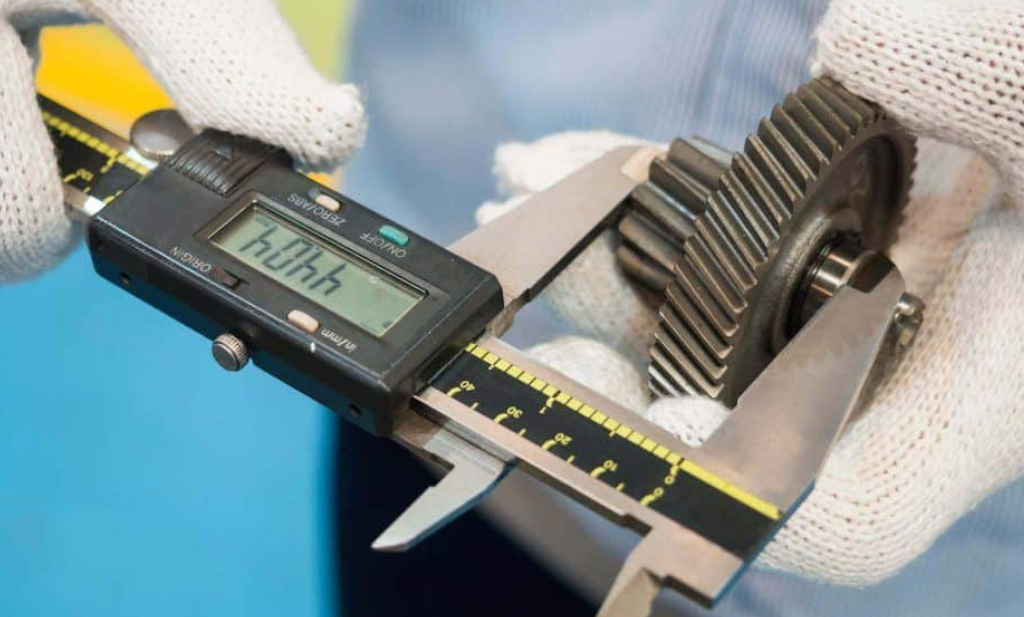
    Calipers are used to measure the distance between two points on an object. They are commonly used in manufacturing, engineering, and construction. Calipers come in two types: inside calipers and outside calipers.

    Inside calipers are used to measure the diameter of holes, while outside calipers are used to measure the diameter of objects. Calipers work by using two jaws that are adjusted to fit around the object being measured. The distance between the jaws is then measured on a scale.

    Calipers can be used in different configurations, including dial calipers, digital calipers, and vernier calipers. The accuracy of calipers is determined by their manufacturing process and the calibration of their measuring scale.

  • Optical Comparators:
    Optical comparators are used to measure the dimensions of objects by projecting an image of the object onto a screen. The image is magnified, and measurements are taken using a calibrated scale.

    Optical comparators are often used for measuring complex parts that cannot be measured using conventional dimensional tools. The accuracy of optical comparators depends on the resolution of the measuring scale and the magnification of the image.

  • CMMs:
    Coordinate measuring machines (CMMs) are computer-controlled machines used for high-precision dimensional measurements. CMMs work by using a probe to take measurements of an object in three dimensions.

    CMMs can be used to measure the dimensions of complex objects with high accuracy and repeatability. CMMs are often used in industries such as aerospace, automotive, and medical devices.

Conclusion

Calibration is an essential process for ensuring that dimensional tools are providing accurate and precise measurements. There are several common methods and tools used in calibration, including gauge blocks, micrometers, calipers, optical comparators, and CMMs. The selection of the appropriate method and tool depends on the type of tool being calibrated and the level of accuracy required. Regular calibration of dimensional tools is crucial to ensure their accuracy and reliability.

Call us to discuss your calibration and repair needs at:
713.944.3139.

Request for Calibration Quote

Request for PPE/Glove Testing Quote
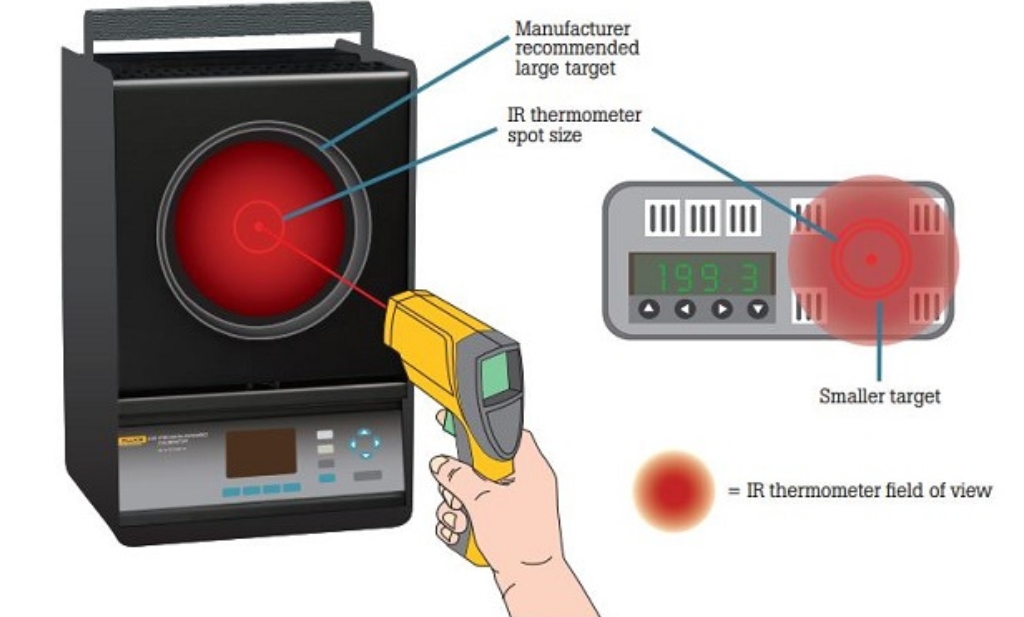
How to Use an Ice Bath to Check the Accuracy of Your IR Thermometer- IR Thermometer Calibration Procedure

by gcc-admin-alpha

Infrared thermometers, also known as IR thermometers, are widely used to measure the temperature of objects and surfaces. These devices are known for their speed, accuracy, and convenience, but it is important to periodically verify the accuracy of your IR thermometer to ensure that it is providing reliable temperature readings. In this blog post, we will discuss how to verify the accuracy of your IR thermometer using an ice bath and the IR thermometer calibration procedure.

Why Calibrate Your IR Thermometer?

Calibrating your IR thermometer is important to ensure that you are getting accurate temperature readings. IR thermometers use a lens to focus the infrared energy emitted by an object onto a temperature sensor. Over time, the lens may become dirty, scratched, or damaged, which can affect the accuracy of the temperature readings. In addition, the temperature sensor may drift due to changes in ambient temperature or humidity, which can also impact the accuracy of the readings.

By regularly calibrating your IR thermometer, you can ensure that it is providing accurate temperature readings. This is particularly important for applications that require precise temperature measurements, such as cooking, HVAC, and industrial processes.

The Ice Bath Calibration Procedure

The ice bath calibration procedure is a simple and effective way to verify the accuracy of your IR thermometer. Here are the steps to follow:

  1. Fill a container with ice and water. Stir the water until it reaches a homogeneous temperature, which is typically close to 32°F (0°C).
  2. Immerse the temperature sensor of your IR thermometer into the ice bath, making sure that it is fully submerged.
  3. Turn on your IR thermometer and aim it at the surface of the ice bath.
  4. Take a temperature reading and compare it to the known temperature of the ice bath, which is 32°F (0°C).
  5. If the reading is different from the known temperature, adjust the calibration of your IR thermometer to match the ice bath temperature. This can usually be done using the menu settings on the device.
  6. Repeat the process a few times to ensure that the IR thermometer is providing accurate and consistent temperature readings.

Tips for Accurate Ice Bath Calibration

Here are a few tips to keep in mind to ensure accurate ice bath calibration:

  1. Use a large enough container of ice and water to ensure that the temperature of the ice bath is homogeneous.
  2. Stir the water in the ice bath to help it reach a homogeneous temperature.
  3. Immerse the temperature sensor of your IR thermometer fully into the ice bath to ensure that it is getting a representative temperature reading.
  4. Avoid touching the lens of your IR thermometer during the calibration procedure, as this can affect the accuracy of the temperature readings.
  5. Repeat the calibration procedure a few times to ensure that the IR thermometer is providing accurate and consistent temperature readings.

Conclusion

Verifying the accuracy of your IR thermometer using an ice bath is a simple and effective way to ensure that it is providing reliable temperature readings. By following the steps outlined in this blog post, you can ensure that your IR thermometer is providing accurate temperature readings for all your applications. Don’t forget to calibrate your IR thermometer regularly to ensure that it is providing accurate temperature readings over time.

Call us to discuss your calibration and repair needs at:
713.944.3139.

Request for Calibration Quote

Request for PPE/Glove Testing Quote
The Key Factors Affecting Calibration

by gcc-admin-alpha

Proper instrument calibration is important to prevent potential error sources from degrading the result. Several factors can occur during and after a calibration that can affect its result. Among these are:

Using The Wrong Calibrator Values

It is important to closely follow the instructions for use during the calibration process. Disregarding the instructions and selecting the wrong calibrator values will “teach” the instrument incorrectly, and produce significant errors over the entire operating range. While many instruments have software diagnostics that alert the operator if the calibrators are tested in the incorrect order (i.e. Calibrator 2 before Calibrator 1), the instrument may accept one or more calibrators of the wrong value without detecting the operator error.

Calibrator Formulation Tolerance

It is important to use calibrators that are formulated to tight tolerance specifications by a reputable manufacturer. There is a tolerance associated with formulating a calibrator/control due to normal variations in the instrumentation and quality control processes. This tolerance can affect the mean value obtained when using the calibrator. For example, if the calibrators have nominal values of 50 and 850 mOsm/kg H2O, and were manufactured toward the low end of their allowable range, the net effect might be to lower the calibration curve by approximately several mOsm/kg H2O over the calibrated range.

As an example, Figure 3 illustrates what can happen in a situation where Calibrator 2 is assumed to be at its nominal value, say 850 mOsm/kg H2O, when the true formulated value is 846. The calibration process “teaches” the instrument incorrectly that 846 is actually 850, thus raising the Actual Results curve higher than it would be if the instrument were “taught” that Calibrator 2 was 846 mOsm/kg H2O, or Calibrator 2 had an actual formulation value of 850 mOsm/kg H2O.

Sample Preparation Technique

As in the case of normal testing, good sample preparation technique is essential to obtaining the best performance from the calibration process. A similar situation to that depicted in Figure 3 can occur if good sample preparation techniques are not followed when providing the calibrator samples. Conditions such as pipeting different sample volumes, allowing air bubbles in the samples, or preparing the samples too early so that evaporation occurs, can all increase the variation in the results obtained from the calibrators tested in the calibration process.

This increased variation can result in mean values for the calibrators that vary by several mOsm/kg H2O from what they should be, erroneously shifting the calibration curve, resulting in increased errors for all results.

Ambient Temperature Effects

It is important to periodically calibrate an instrument at a temperature close to that at which it will be operated. Even when a calibration is performed properly, there are other factors that can affect the accuracy of results. Environmental factors, such as the ambient temperature, can introduce errors that may not be readily evident when testing samples with unknown values.

Components, such as electronics, used in an instrument may be affected by changes in operating temperature. If an instrument is calibrated at one temperature and then operated at a significantly different temperature, the temperature-induced error can also degrade the results’ accuracy.

Call us to discuss your calibration and repair needs at:
713.944.3139.

Request for Calibration Quote

Request for PPE/Glove Testing Quote

Understanding ISO 9001 Calibration Requirements

by gcc-admin-alpha

ISO 9001 is a quality management system for manufacturers (product producers) and service providers. Other more specific standards exist for specialized industries such as automotive, pharmaceuticals, and Oil and Natural Gas, but ISO 9001 remains integrated with them.

In order for a calibration process to be properly implemented, we must have in-house calibration management.

What is calibration and why do we need calibration?

Read up on our previous post >> What is Calibration and Reason for Calibration

Calibration management is governed by ISO 9001: 2015 Standards, which include specific clauses outlining the requirements for proper implementation.

ISO 9001 Calibration Requirements

What are the ISO 9001 Calibration requirements? The related clauses where calibration requirements are provided are listed below. These are the clauses with calibration requirements that have a direct impact on the calibration results:

  1. Clause 7.1.2 People.
  2. Clause 7.1.4 Environment for the operation of processes.
  3. Clause 7.1.5.1 General monitoring and measuring requirements
  4. Clause 7.1.5.2 Measurement traceability.
  5. Clause 7.2 Competence.
  6. Clause 9.1.1 General requirements for monitoring, measurement, analysis, and evaluation

For our publication, we highlight only 3 of the clauses listed above.

Clause 7.1.4 Environment for the operation of processes

This clause necessitates the monitoring and control of the environment in order for calibration to be performed correctly. Environmental conditions that influence the final output of calibration results should be monitored and controlled, as per ISO 17025 requirements.

The following are some examples of environmental conditions that we must monitor and control:

Temperature
Humidity
Vibrations
Dust
Proper lighting
Not all of the items listed above must be controlled at the same time in a lab. This is determined by the criticality and the impact it can have on the calibration process.

Temperature and humidity are the two environmental conditions that are always controlled because almost all instruments require them for proper operation, as detailed in their specifications.

Clause 7.1.5. monitoring and measuring requirements

Monitoring and measuring instruments are instruments that we use to perform measurements.
“It is either we perform a measurement to monitor and control a process or we perform measurement for verification of the output of our process.”
Keeping this in mind, all monitoring and measurement instruments should be controlled.

The control provided are:

  • The instrument to be used should be suitable. Suitable means it covers the range and accuracy requirement. For every monitoring and measuring instrument we use, we should ensure that the usable range can be covered and as much as possible, it has higher accuracy than the process to be measured. Recommended is to maintain the Test Uncertainty Ratio.
  • Every monitoring and measuring instrument should be maintained to ensure confidence while using or within its calibration interval. Maintained means:

a. Properly monitored for its statuses like locations, labels, and calibration due dates.

b. Preventive maintenance is performed

c. Intermediate check is performed.

Records of Implementation of the above requirements should be maintained that can be used as evidence of implementation during audits.

Clause 7.2 Competence

As defined by ISO 19011, competence is: “demonstrated personal attributes and demonstrated ability to apply knowledge and skills “.

Clause 7.2 and 7.1.2, which is about how people relate to each other. ISO 9001 clause 7.1.2 requires that “The organization shall determine and provide the persons necessary for the effective implementation of its quality management system and for the operation and control of its processes.”

In relation to calibration, the People, which are the personnel involved in performing calibration should be competent or have the necessary competency.

Personnel Competency is one of the main requirements that we must meet. All factors that influence the quality of calibration performed depend on the knowledge, skills, experience, and education of Personnel.

You may have a high-end calibrator, a good calibration procedure, and a well-equipped facility but the person in charge is not suitable for the calibration activity performed, then the calibration results may be invalidated.

To be competent means the technician:

1. Has the necessary competence requirements such as appropriate education, training, or experience;

2. Passed the competency evaluation

3. Is authorized to perform important laboratory activities

4. Has monitored competency and continued education


All the records and recorded information resulted from this process should be maintained and used as evidence of competency.

Call us to discuss your calibration and repair needs at:
713.944.3139.

Request for Calibration Quote
Request for PPE/Glove Testing Quote
Safeguarding Yourself Through Consistent Glove Testing

by gcc-admin-alpha

What is Calibration?

Calibration refers to the process of standardizing or adapting measurement equipment in order to obtain more accurate results. During calibration, the technician will measure the piece of equipment against the baseline to see if it fits. If the equipment measurements do not meet the acceptable accuracy factor defined by the standard, a trained technician will make adjustments until this is done.
Different instruments will require a different calibration process. For example, a calibration lab will calibrate sensors differently from thermometers. Often, you can hire experts to come to your facility to calibrate the equipment, or you can send the equipment to a lab for calibration.Different instruments will require a different calibration process. For example, a calibration lab will calibrate sensors differently from thermometers. Often times, you can hire experts to come to your facility to calibrate the equipment, or you can send the equipment to a lab for calibration.

Why Do We Need to Calibrate Equipment?

Over time, the accuracy of any measuring device will begin to decline. Typically, this reduction in accuracy is due to normal wear and tear of the various components but may also be due to a harmful environment or mechanical or electrical shock. The attenuation factor of the measurement equipment may vary depending on the environment and type. Due to this decline in measurement accuracy, organizations with measurement equipment prefer to calibrate on a regular basis. By calibrating your equipment, you are giving it the accuracy it needs to do its job properly. The calibration of the measuring devices also ensures that a high level of product quality is maintained. The reason for calibrating the hardware is reliability. When you calibrate your instruments regularly, you know your measuring device is accurate and will read your command according to other measuring devices. Calibration is essential if you care about the accuracy and consistency of your measuring instruments.

4 Reasons for Calibration

When a company calibrates its equipment, there are several benefits to it. Some of these benefits include a longer instrument life span, greater safety assurance, greater savings, and easier certification. At Gulf Coast Calibration, we calibrate our customers’ equipment to deliver these benefits and always have accurate measurement devices.

Find out more about the four main reasons we calibrate your hardware below:

  • Ensure Safety:
    When you use calibration equipment for critical processes, safety is paramount. Even minor inaccuracies can cause the device to malfunction or give false information about how safe something is, leading to injury or damage to the equipment. Regular calibration of the equipment enables accurate measurements to be obtained and hazardous situations to be avoided.
    As calibration improves safety, many industries use calibration to protect their assets and personnel. Some industries in which calibration is crucial to safety are manufacturing, medical, and food processing.
  • Save Money:
    Calibrating your equipment according to the recommended schedules can save you a lot of money. As hardware calibration prevents accuracy errors, it helps manufacturers reduce manufacturing errors that can lead to product failure. Likewise, inaccurate food temperature measurements can lead to spoilage. In research laboratories, inaccuracy can lead to erroneous readings by workers, rendering any results meaningless. No matter what industry you work in, mistakes will ultimately increase costs.
    Calibrating your equipment saves you money as you don’t waste money throwing away defective products or extra staff costs when they have to repeat tests in the lab. You will also save money and increase your income by reducing the costs of stopping processes and restarting them as soon as your team discovers an inaccuracy. By reducing errors, you optimize your organization better and make the most of your equipment.
  • Increased Lifespan of Equipment:
    Every measuring device will wear out over time. Instead of throwing your device away and replacing it with a new one when it ceases to provide accurate measurements, you can calibrate it to restore normal levels. After the old equipment is calibrated, it should perform to the original standards. Thanks to this, you can use the device for much longer.
    Calibration can also help pay attention to how quickly a piece of equipment breaks down, helping you observe factors such as ambient pressure or specific applications that are causing more wear. With this information, you can make adjustments to prevent faster wear and tear and keep your tools in better condition for a longer period.
  • Assure Compliance with Certification:
    Many industries require companies to have the appropriate certifications in order to operate legally. You will likely need a regulatory review before proceeding with certain tasks. Often these certifications require confirmation that you are calibrating your equipment and are reliable enough to get accurate results. If you regularly calibrate your equipment, it will be easier for you to get certified by the relevant regulatory bodies.
    Calibration enables your equipment to obtain accurate results by helping you pass certification tests on the accuracy of your devices.

Call us to discuss your calibration needs at:
713.944.3139.

Request for PPE/Glove Testing Quote